The news of this family’s lives, as it reached them — the hometown paper on the doorstep and the voices on the radio — gathered beside the people who lived those days. This tab will keep growing as more of it comes to hand.
“Tough times never last, but tough people do.”
— Robert H. Schuller
Every generation in these pages met its hard years — and came through them. Whatever you are facing today, this family has seen worse. We stand together and persevere.
The First World War
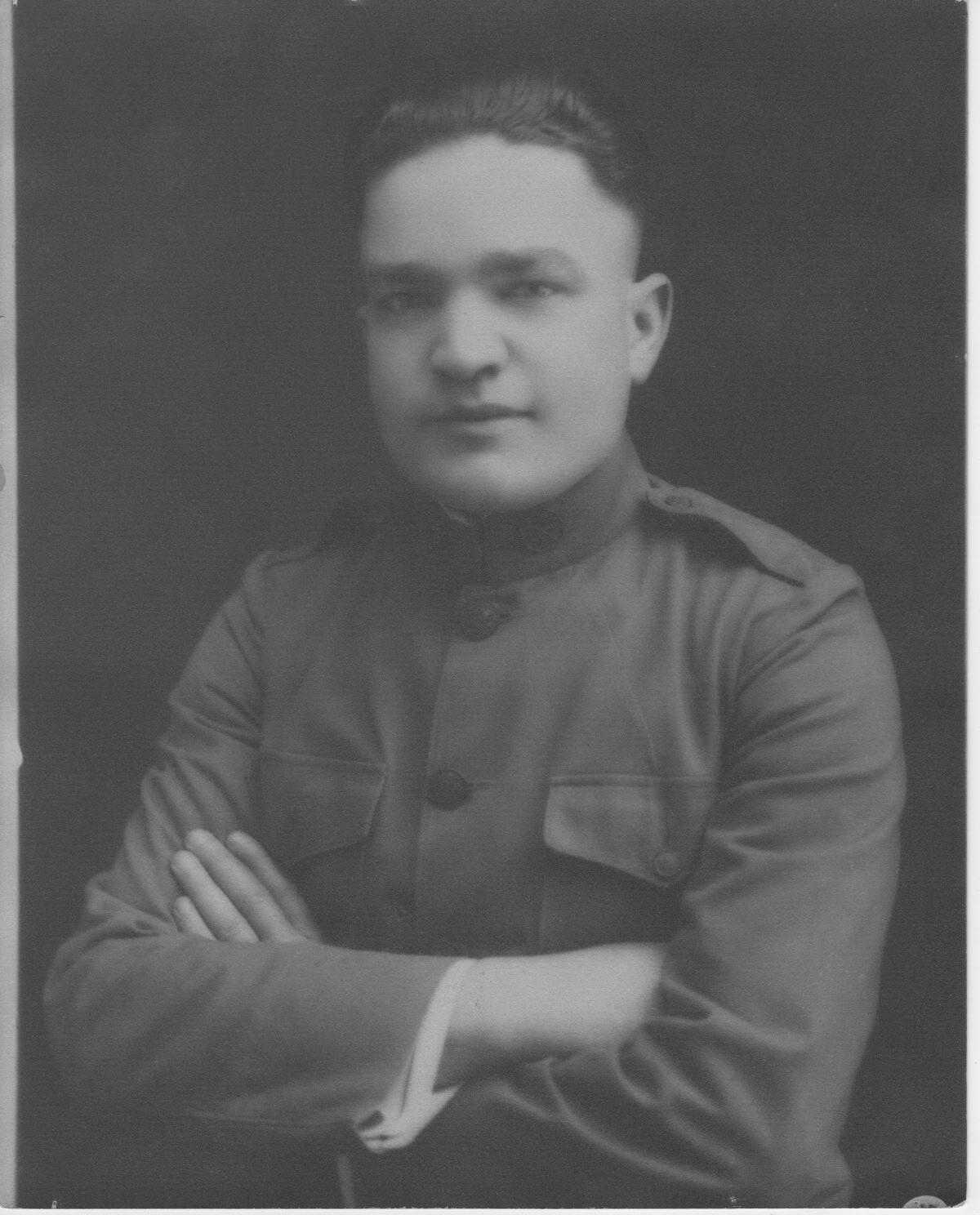
Thomas Martin Hubbard — Martin J.’s father. He went to France as a Private First Class and came home to St. Louis. The songs his outfit sang, his commanding general’s voice, and the paper St. Louis read on Armistice Day are here with him.
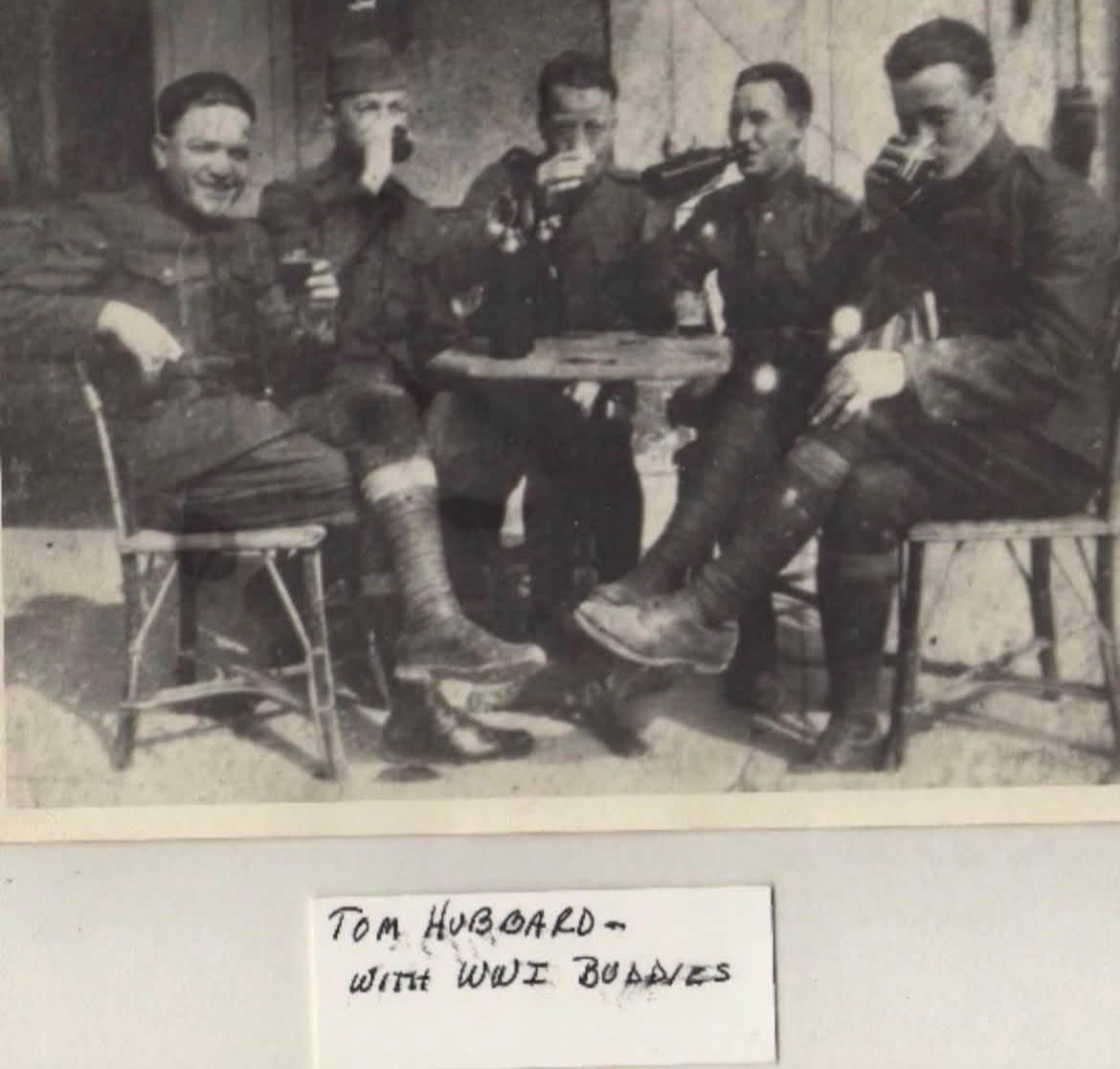
Thomas Martin Hubbard (far left) with Army buddies at a café in France, 1918–1919 — the full print, just as it sits in the family album, captioned in a family hand: “Tom Hubbard — with WWI buddies.” Copy sent by his grandson Tim Hubbard.
Hear His War — 1917–1918
Period recordings and the hometown paper — what the world sounded like around Thomas Martin Hubbard’s war.
“Over There” — Arthur Fields (1917) · 2:44
George M. Cohan’s song was the signature tune of the American soldier — what “over there” sounded like to the men at the café table above.
“Oh! How I Hate to Get Up in the Morning” — Arthur Fields (1918) · 2:49
Irving Berlin’s comic reveille song, written about his own Army mornings — the soldiers’ own joke about Army life.
“Keep the Home Fires Burning” — John McCormack (1917) · 3:07
The great home-front ballad — the song the family back in St. Louis was hearing while he was gone.
General John J. Pershing — “From the Battlefields of France” (1918) · 0:40
His commanding general’s actual voice, recorded for the Nation’s Forum series.
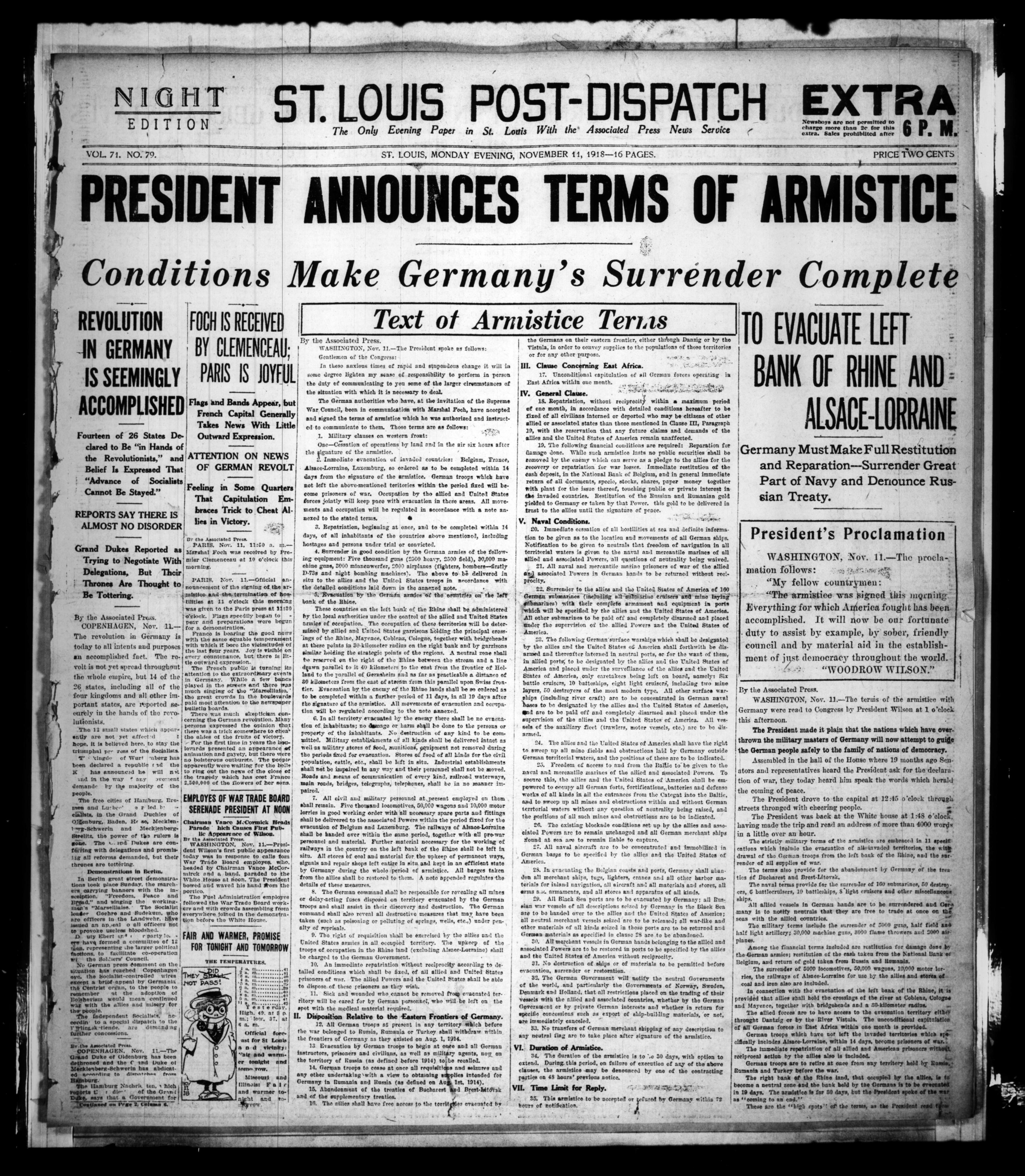
St. Louis Post-Dispatch — Armistice Night Extra, November 11, 1918. “PRESIDENT ANNOUNCES TERMS OF ARMISTICE.” The paper St. Louis read the day the war ended and he could come home. Tap the page to enlarge it.
The Depression Years
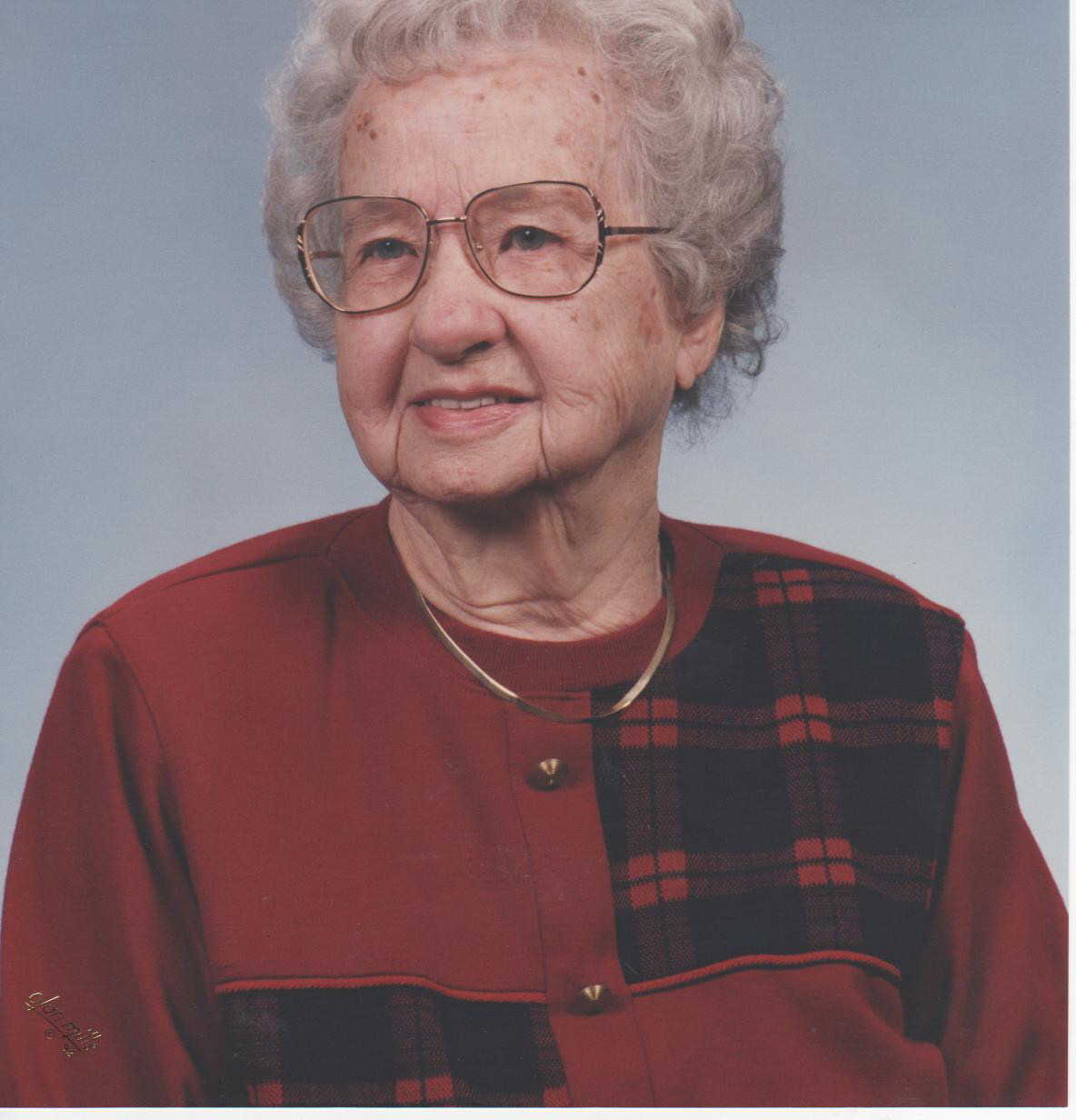
Helen Theresa “Nell” Gould Hubbard — Martin J.’s mother. The Depression years closed with her a widow: Thomas Martin died in May 1939, and Nell raised their children in St. Louis, at 3884 McDonald Avenue — Martin, Bill, Tom and Walt, and baby Mary Ellen. The hometown paper of those years is here with her.
The Depression Years — What St. Louis Read
The hometown paper of Nell’s hardest decade — the crash, and the week the banks closed.
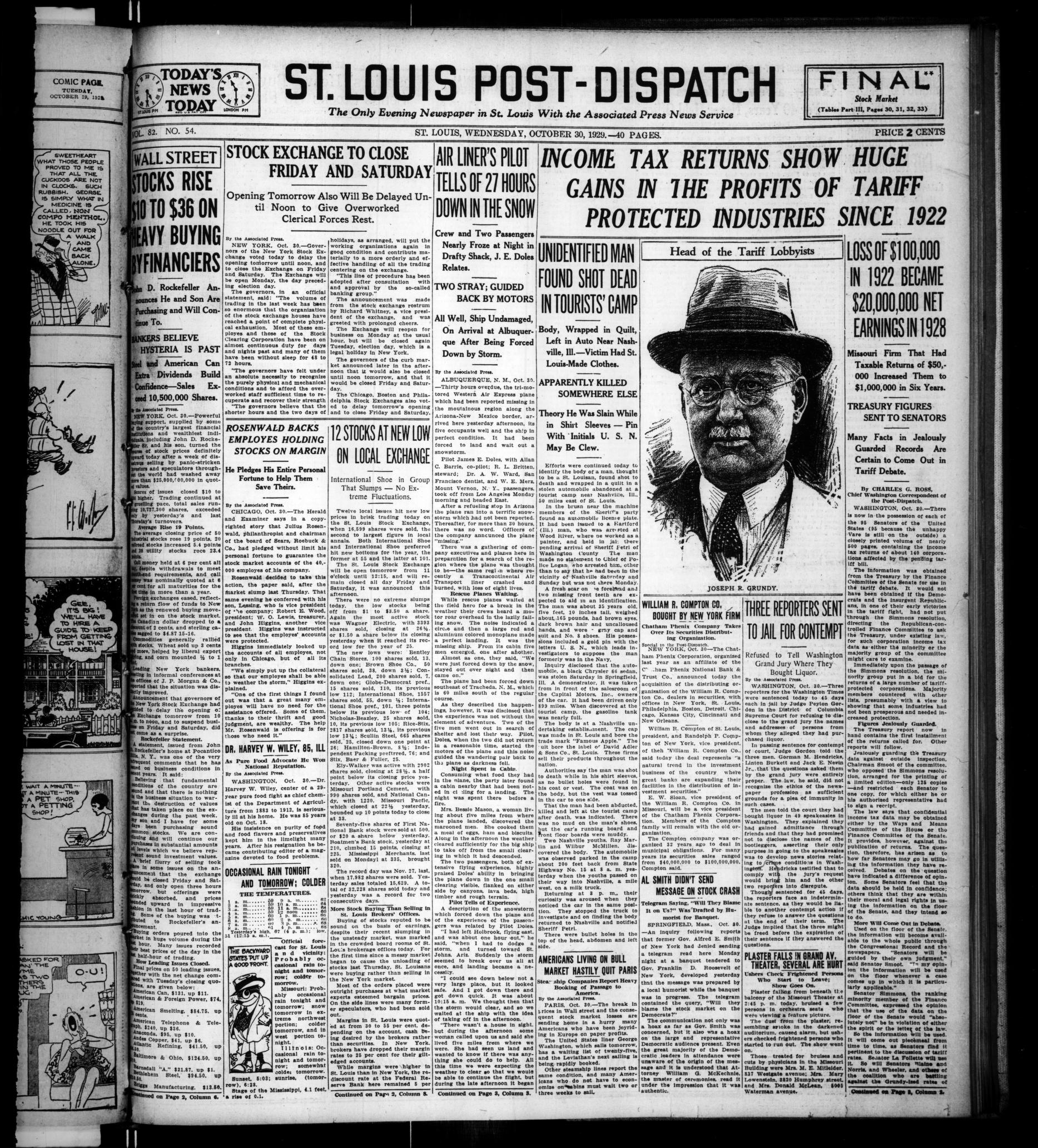
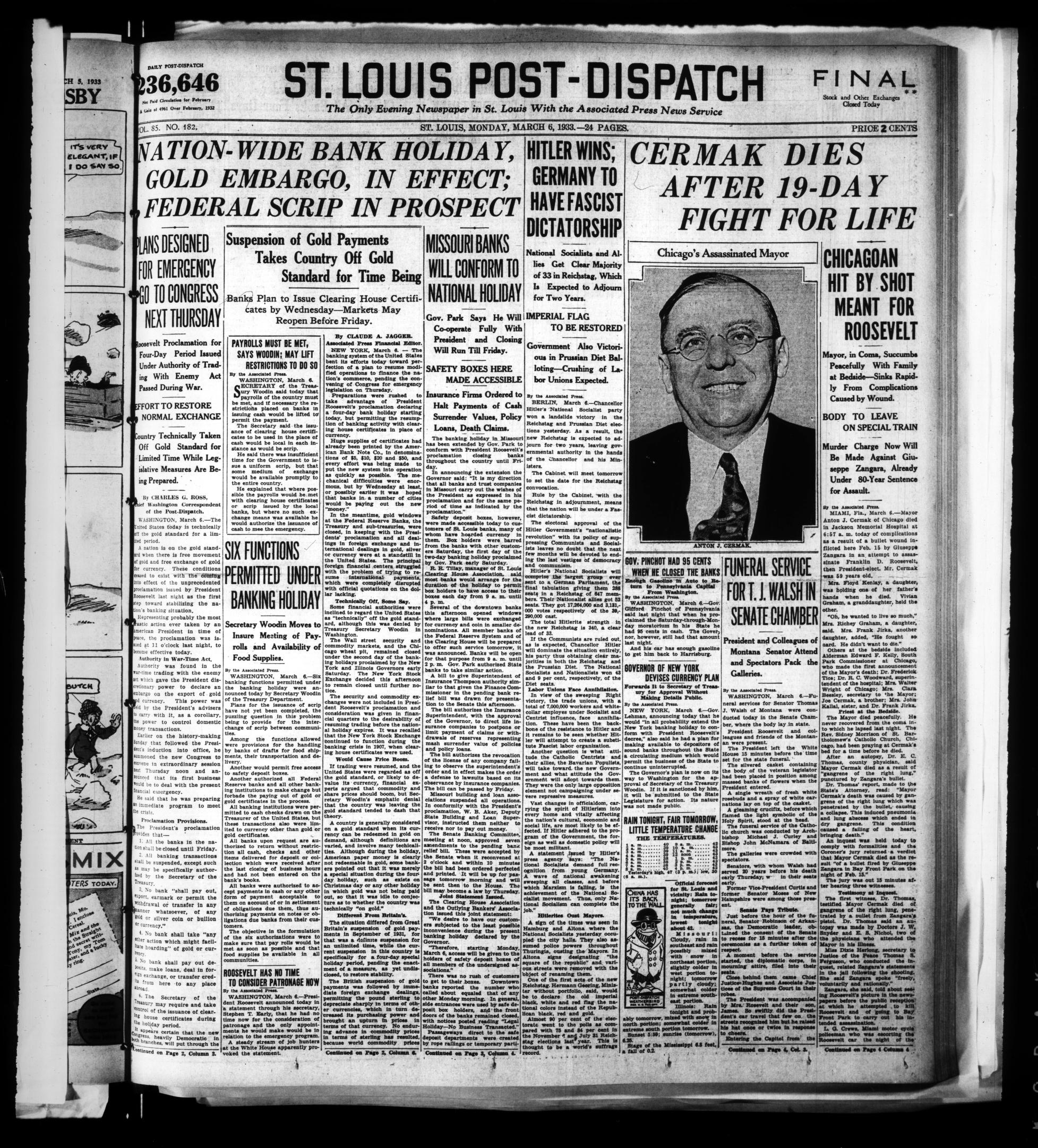
St. Louis Post-Dispatch — Wednesday, October 30, 1929. The day after the crash: “Stock Exchange to Close Friday and Saturday,” “Bankers Believe Hysteria Is Past” — and down the page, “12 Stocks at New Low on Local Exchange.” The paper that came to the Hubbard house in St. Louis as the Depression began.St. Louis Post-Dispatch — Monday, March 6, 1933. “Nation-Wide Bank Holiday, Gold Embargo, in Effect” — and “Missouri Banks Will Conform to National Holiday.” Two days into President Roosevelt’s term the banks were closed and the country was off gold; in the next column, Hitler’s win in Germany. The bottom of the Depression — and Nell’s family lived through it in St. Louis.
The Second World War
Martin J. Hubbard — father of the eight Hubbard brothers and sisters. He served in the U.S. Army Air Forces, and married Dorothy Danley while he was in uniform. The President’s speeches, the broadcasts, the music, and the Post-Dispatch front pages of those years are here with him.
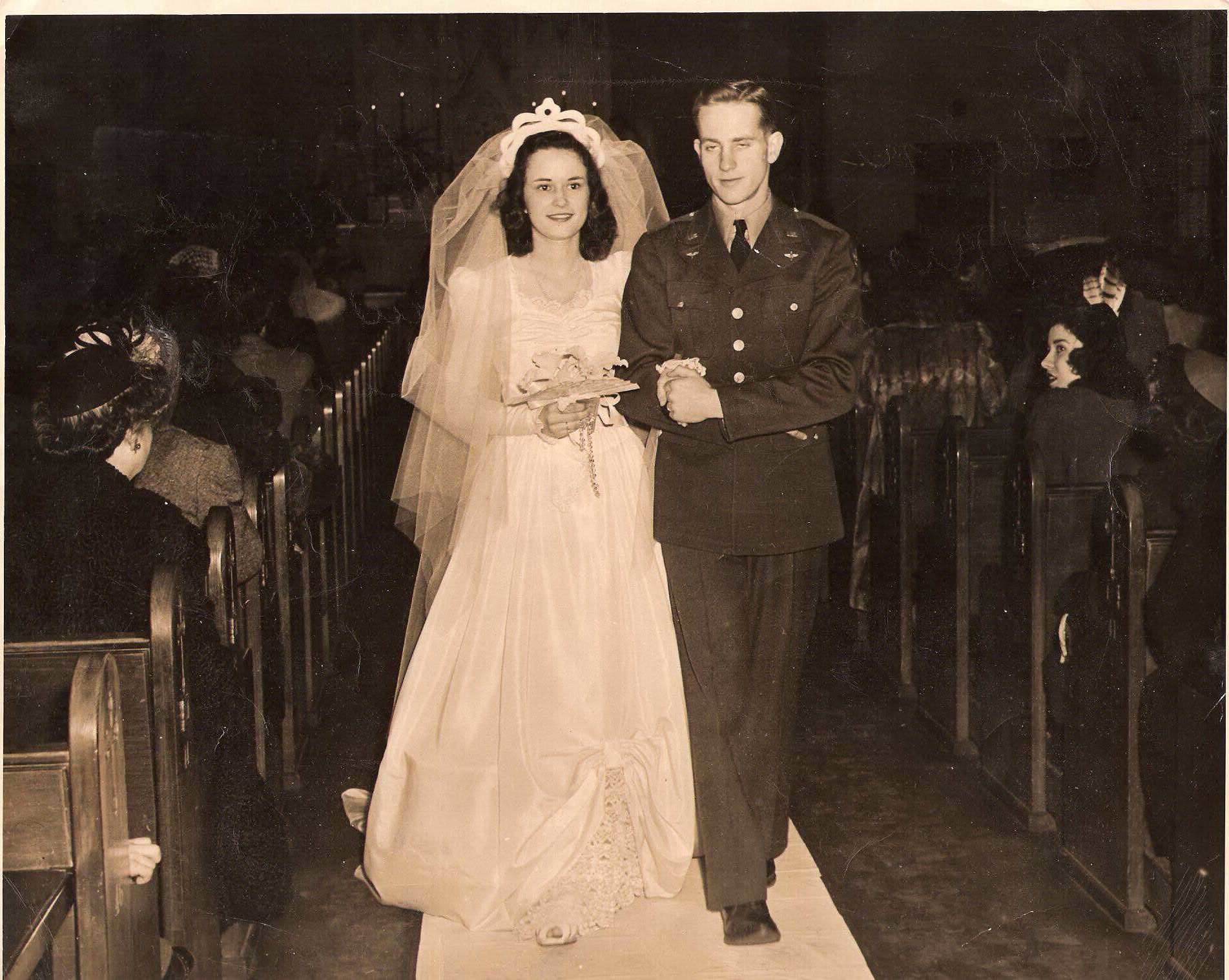
Martin and Dorothy’s wedding day. She in lace and veil, carrying her bouquet and prayer book; he in his Army Air Forces uniform, wings on his chest. They married while he was in uniform, about 1944; no marriage record has ever been found.
The War Years — What St. Louis Heard, 1941–1945
Period broadcasts and hometown front pages. No St. Louis-only wartime broadcast survives freely — this is the national radio St. Louis heard, with the Post-Dispatch from the same days.
December 8, 1941 — War Comes
President Roosevelt — the “Day of Infamy” address to Congress · 8:40
The day after Pearl Harbor, the President asks Congress to declare war on Japan.
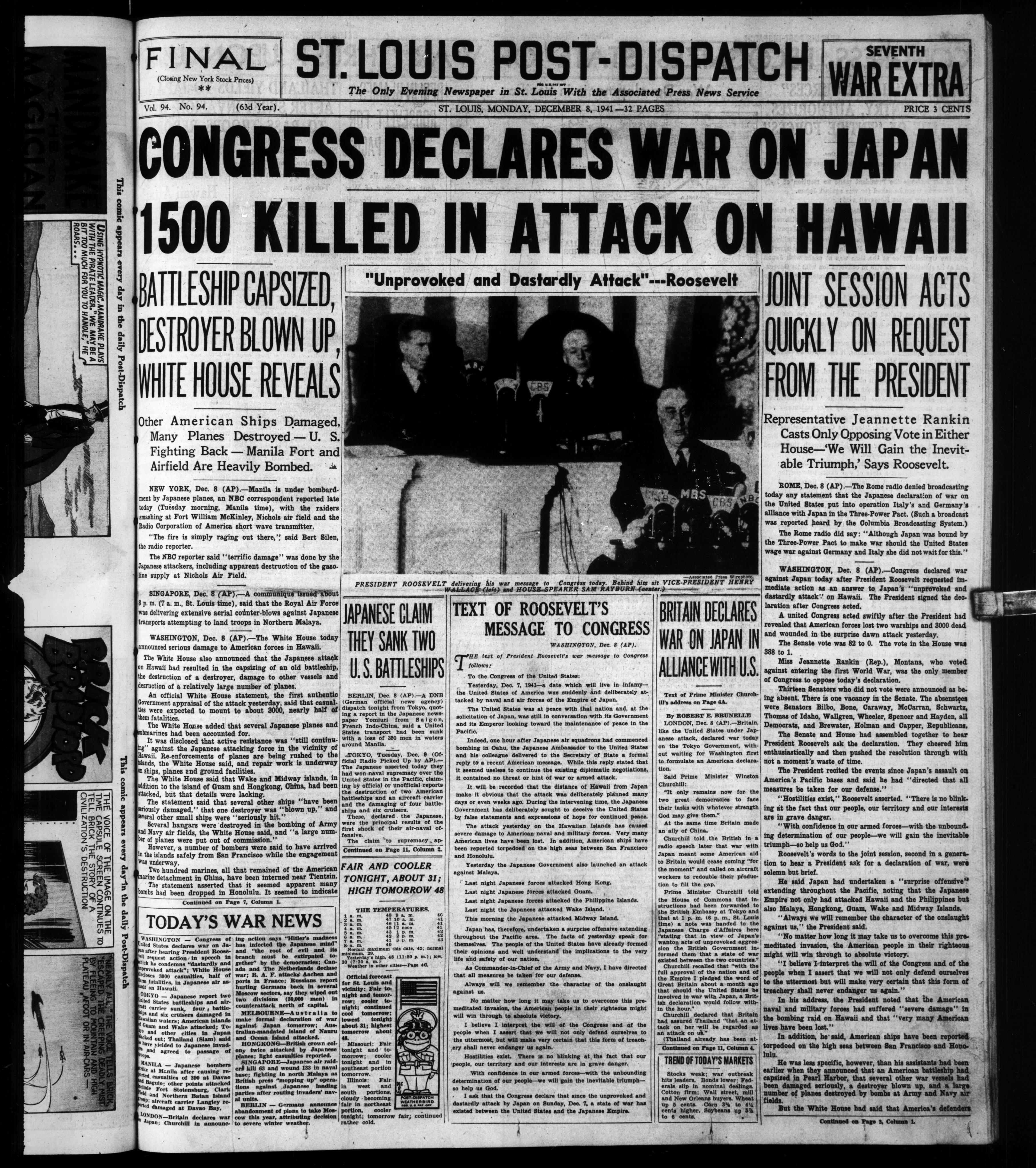
St. Louis Post-Dispatch — December 8, 1941. “CONGRESS DECLARES WAR ON JAPAN.” The same front page prints the President’s message in full. Tap to enlarge.
June 6, 1944 — D-Day
NBC News — D-Day morning newscast, 6:30 AM · 29:19
The invasion news as it first reached American homes that morning.
President Roosevelt — the D-Day Prayer, that evening · 6:50
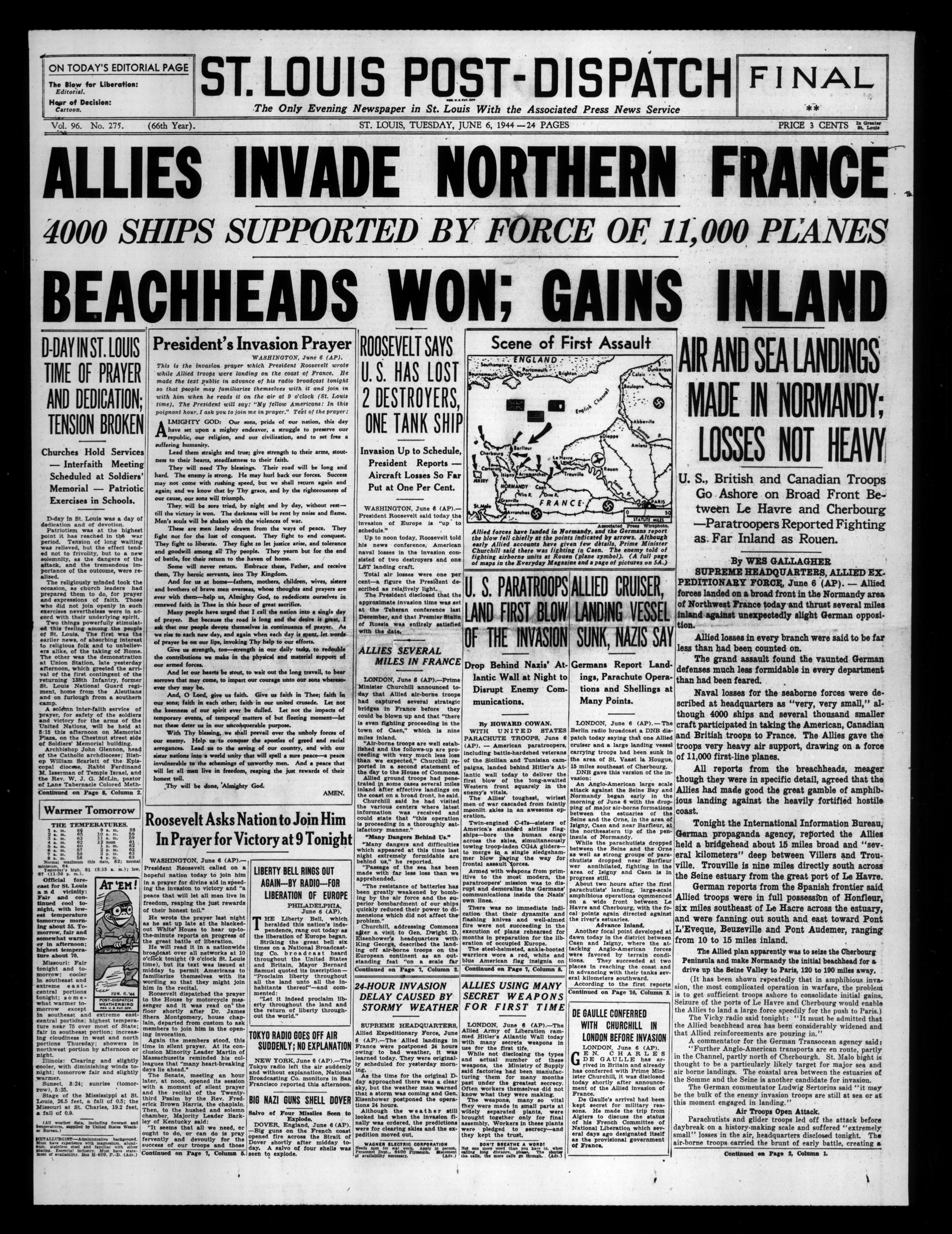
On the night of the invasion the President led the nation in a prayer he had written for it — the front page below prints the prayer’s full text.
St. Louis Post-Dispatch — June 6, 1944. “ALLIES INVADE NORTHERN FRANCE,” with the President’s Invasion Prayer and a hometown column, “D-Day in St. Louis.” Tap to enlarge.
May 8, 1945 — Victory in Europe
NBC — V-E Day: President Truman’s victory address and reports · 30:45
From the moment Truman proclaimed victory in Europe — 9 AM Eastern, 8 AM St. Louis time.
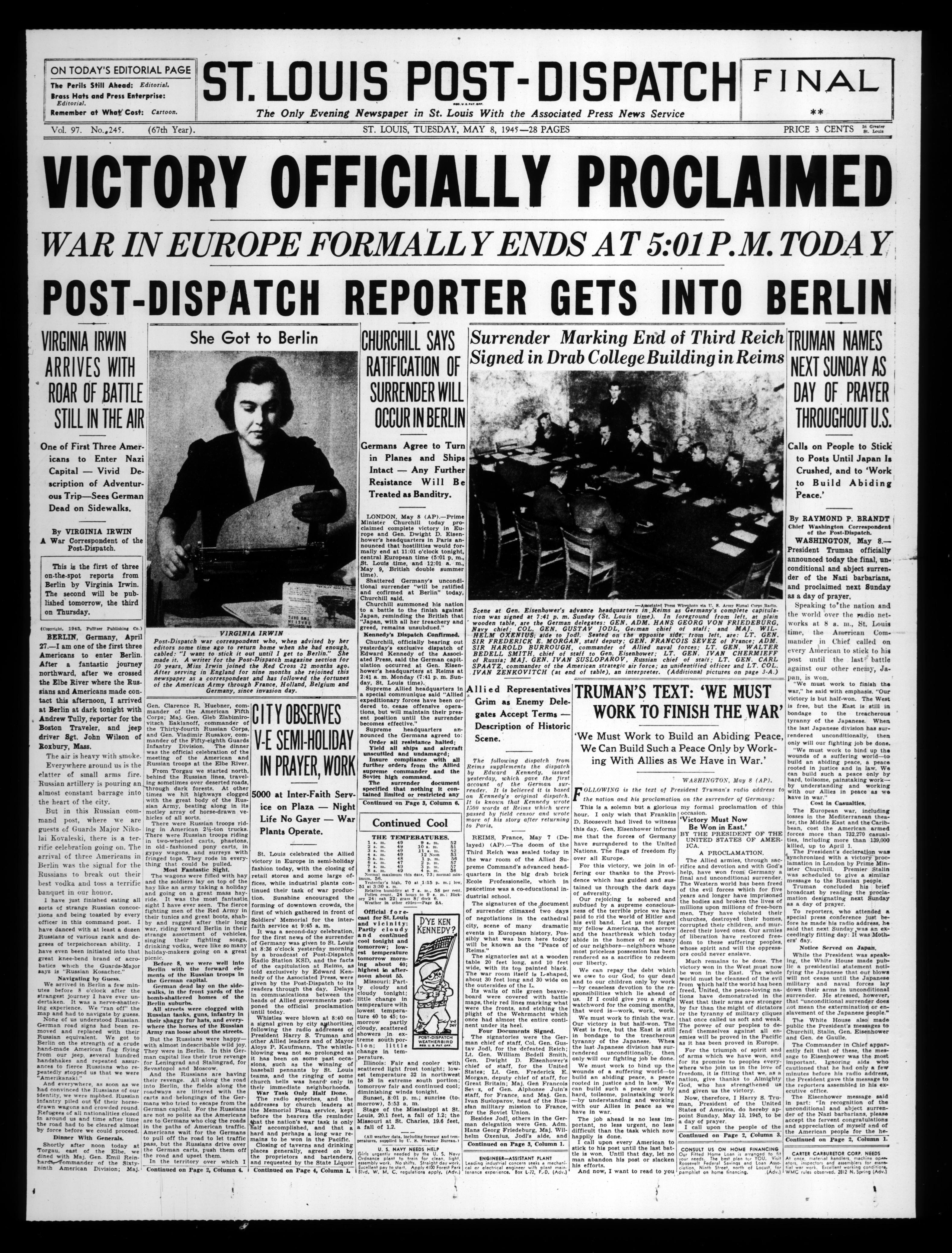
St. Louis Post-Dispatch — May 8, 1945. “VICTORY OFFICIALLY PROCLAIMED,” with Truman’s address and the city’s own observance. Tap to enlarge.
August 14–15, 1945 — The War Ends
CBS World News Today — V-J Day celebrations · 3:37
Live coverage of the street celebrations the day Japan’s surrender was announced.
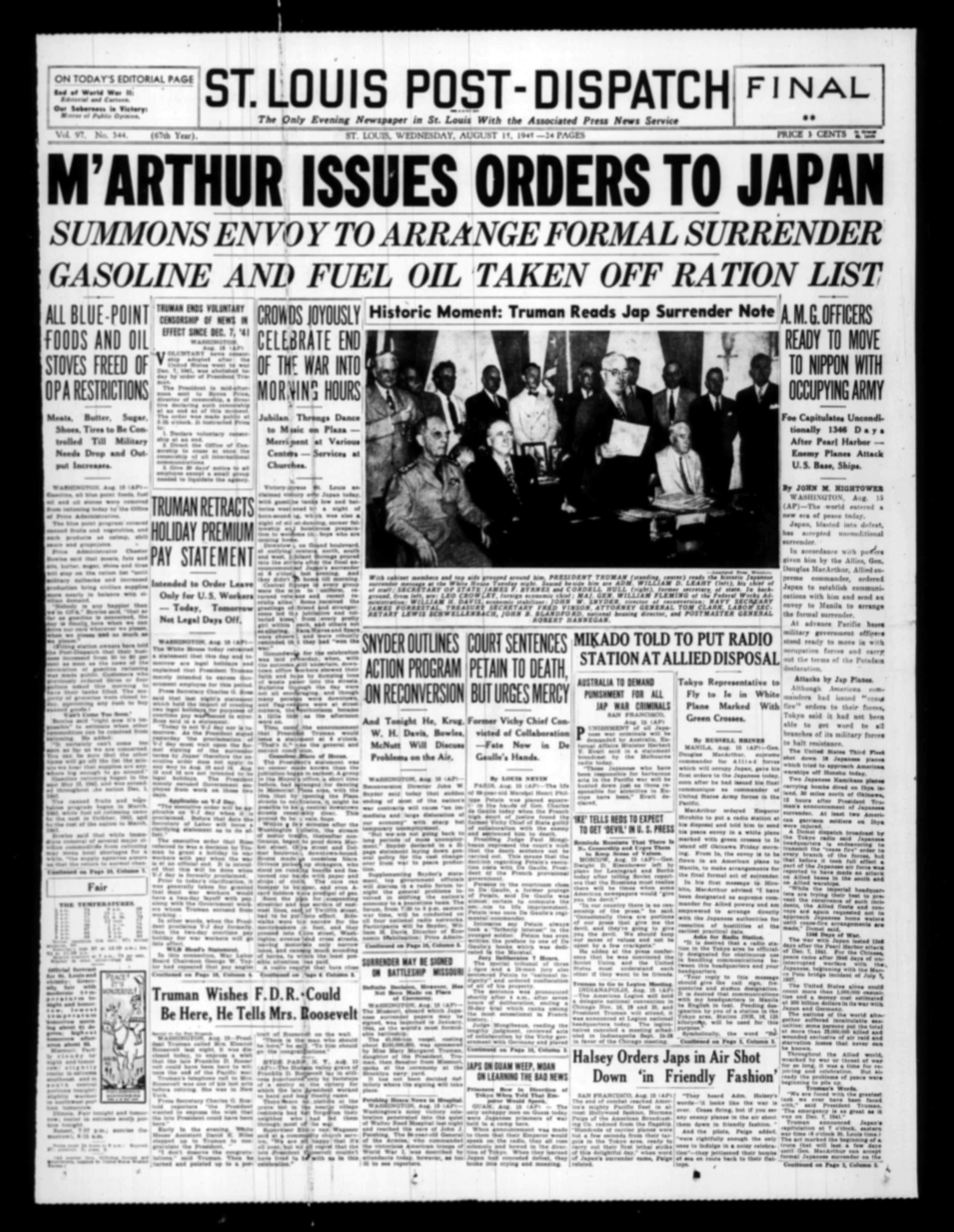
St. Louis Post-Dispatch — August 15, 1945. St. Louis’s V-J Day paper — its local story tells of crowds joyously celebrating the end of the war into the morning hours. Tap to enlarge.
The Music of His War
“In the Mood” — Glenn Miller and His Orchestra (1939) · 3:34
The big-band sound itself — the record every dance hall in America wore out, and the music Martin’s generation danced to before the war took them.
“I’ll Be With You in Apple Blossom Time” — The Andrews Sisters (1941) · 3:01
The Andrews Sisters sang to the servicemen all through the war. This was their promise to the boys overseas — I’ll be with you when the blossoms come again.
“We’ll Meet Again” — Vera Lynn (1939) · 2:58
The song of parting and promise — “we’ll meet again, don’t know where, don’t know when.” Every man in uniform knew it by heart.
“White Christmas” — Bing Crosby (1941) · 2:44
The very first time Bing Crosby sang it — live on the radio on Christmas Day 1941, eighteen days after Pearl Harbor. It became the song the boys overseas asked for most.
Vietnam
Thomas M. “Tom” Hubbard — one of the eight Hubbard brothers and sisters. He served in Vietnam and came home with the Bronze Star and the Purple Heart. The sounds and the papers of his war will gather here as we find them.